Your service pages do three jobs at once now: rank on Google, give AI tools something clear to quote, and convince a human to pick up the phone. On-page SEO makes each page good at all three.
On-page SEO improves the content and structure of individual pages so they match what searchers want. It covers page titles, meta descriptions, headings, answer-first copy, FAQs, internal links, images and structured data. Done well, it lifts rankings, makes pages easier for AI tools to quote, and turns more visitors into enquiries.
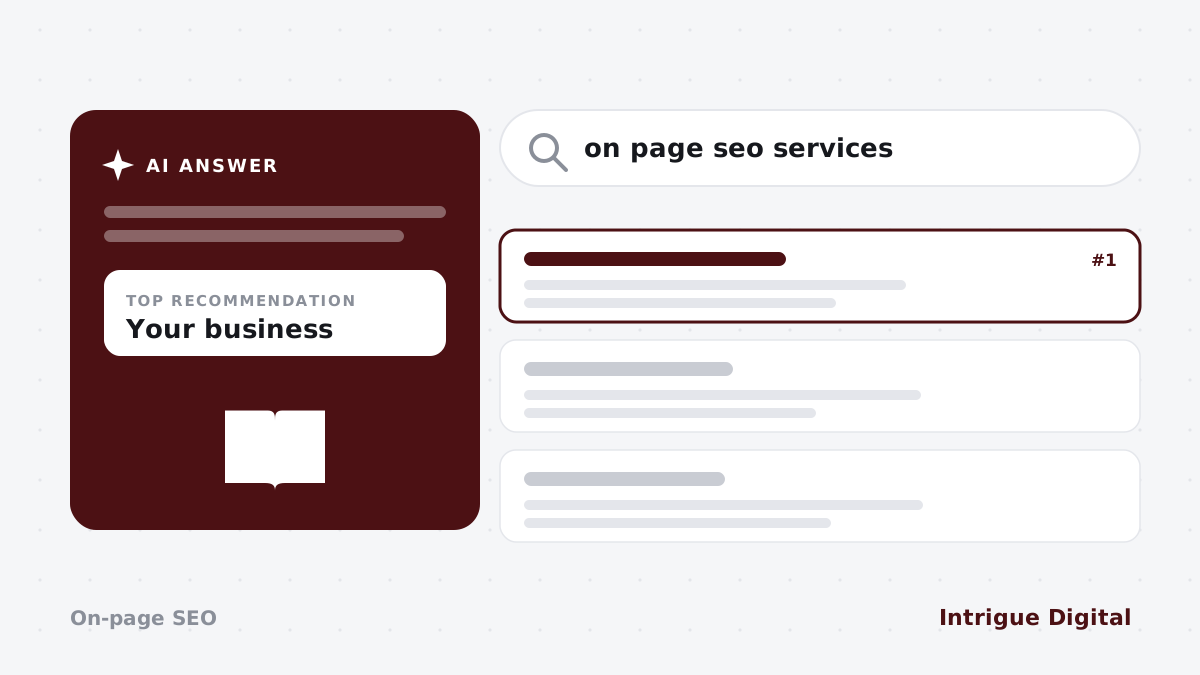
We do not pad pages with keywords or word count. We rewrite them so the answer comes first, the detail is easy to scan and the next step is obvious. For a law firm that might mean a practice-area page that opens with who it is for, what it costs to get started and what happens at the first meeting. For a defence supplier it might mean a capability page with specifications, certifications and a clear contact path for procurement teams.
Written to win the click, not just to include a keyword.
A short, direct answer at the top of the page that Google snippets and AI tools can lift as-is.
Question-style headings that mirror real searches, with tables and lists where they help.
Real buyer questions answered plainly and marked up so search engines can read them.
Every important page linked from the right places with descriptive anchor text.
Credentials, reviews, case studies and calls to action placed where buyers look for them.
Legal services advertising is regulated in every state, and some states restrict how personal injury services can be advertised. Defence suppliers have their own limits on what can be published. We write within those boundaries: no guaranteed outcomes, no misleading claims and nothing that should stay inside your security review. You approve every page before it goes live.
Proof, not promises: Coactive Life Design reached page one of Google for "life coach Melbourne", Blanket Fire Protection holds #2 for "Melbourne fire doors" and SLB Legal's practice-area keywords sit on page one. See the results →
Independent research on search and AI behaviour, last reviewed October 2026. We re-check these figures at least every six months.
Technical SEO makes sure search engines can reach and read your site. On-page SEO improves what they find once they get there: the words, structure, headings, FAQs and links on each page.
Usually not. We start with the pages that bring in enquiries, or should, and improve them in order of likely impact. Some pages need small changes, others a full rewrite.
Always. Nothing is published without your sign-off, which matters especially for regulated industries such as legal services.
Not by itself. Pages rank when they answer the search better than the alternatives. Sometimes that takes depth, sometimes it takes a shorter, clearer page.
Book a free 30-minute strategy call. One business per industry, per postcode, so your direct competitor can't buy the same spot.
 Intrigue Digital