 Intrigue Digital
Cheap leads are lying to you
The lowest cost per lead is rarely the best number in your report. Judge marketing by what happens after the form.
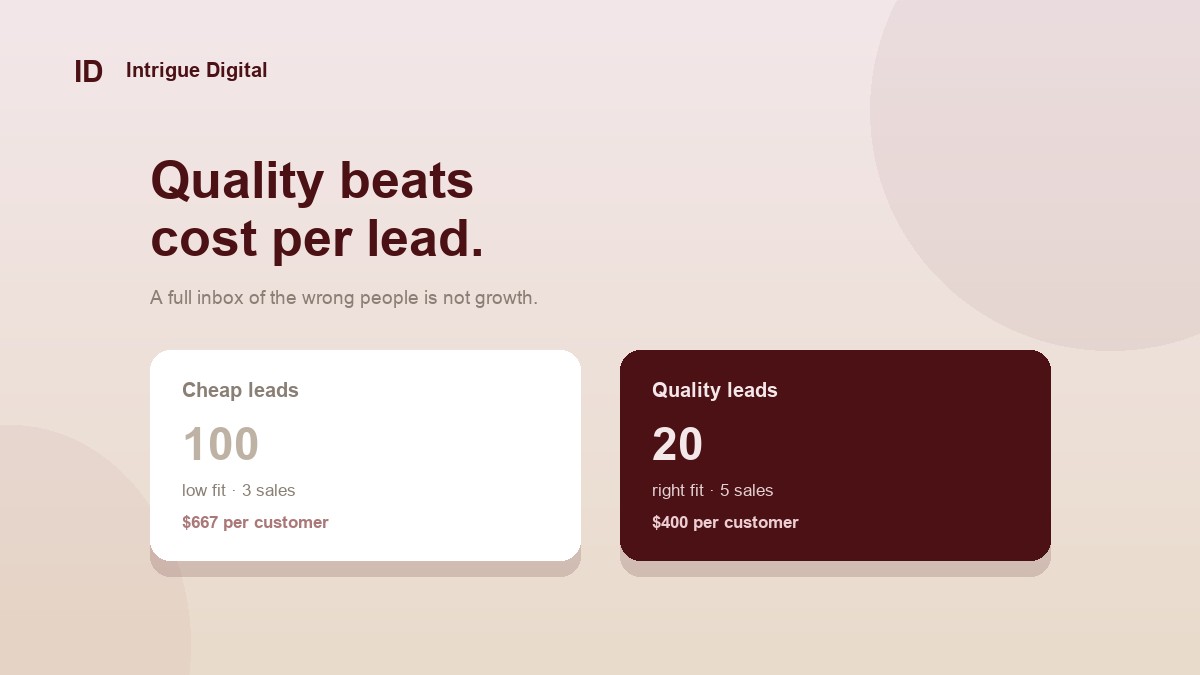
The cost-per-lead trap
Cost per lead is seductive because it is easy to measure and easy to improve. Loosen your targeting, widen your audience, run a flashier offer, and the number drops. The campaign looks more efficient every week. The problem is that the cheapest leads are usually the least qualified, and a sales team that spends its days chasing people who were never going to buy is an expensive kind of busy.
A full inbox of the wrong people is not growth. It feels like progress on the dashboard and shows up as nothing in the bank. The only honest test of a marketing channel is what those leads do after they arrive.

Case study: builders judging the wrong number
Harry Sumpter, General Manager of Sea Salt Marketing, made this point about residential builders in our Business Spotlight. Builders who chase the lowest cost per lead, he explained, often fill their pipeline with enquiries from people who were never serious about building. The report looks efficient, and the sales week is wasted. The better question, he argues, is what happens after the form: does the lead qualify, does it book a consultation, does it sign.
For a high-consideration purchase like building a home, a smaller number of genuinely interested enquiries beats a flood of curious browsers every time. The cost per lead on the good campaign may be higher. The cost per customer is lower, and that is the number that pays wages.
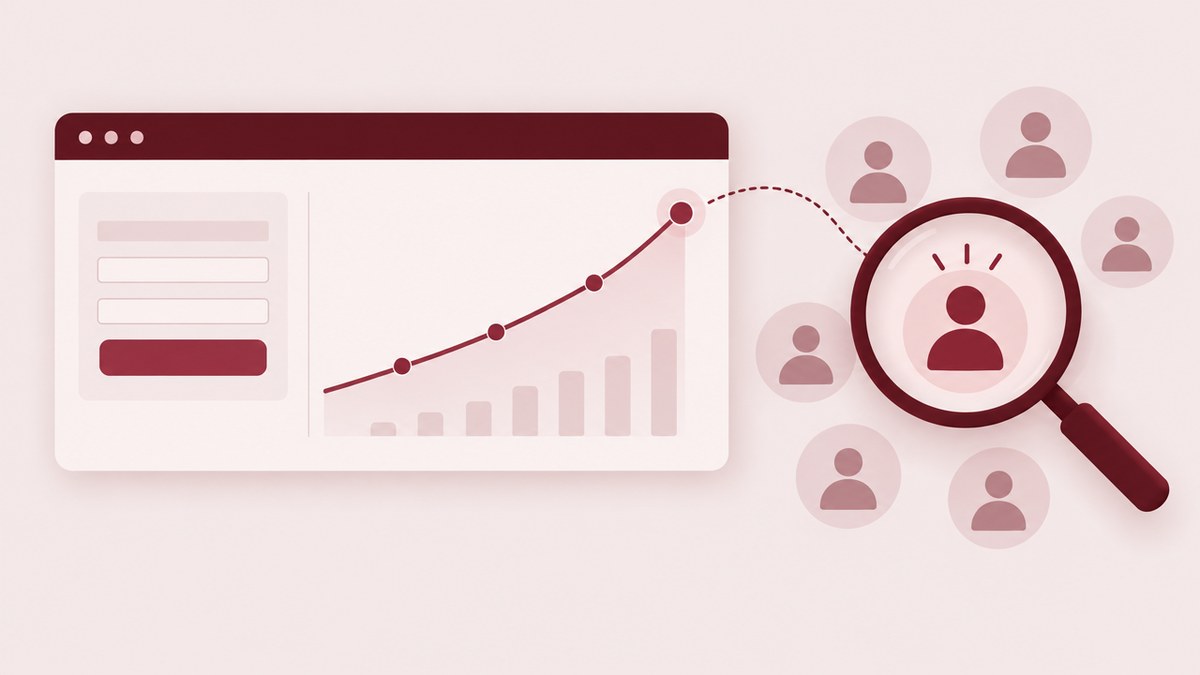
What to measure instead
- Lead-to-sale rate. Track every lead through to booked and closed, by channel. This alone reveals which cheap leads are quietly worthless.
- Cost per customer, not per lead. Divide spend by actual customers won. A channel with pricey leads and high conversion often wins.
- Revenue and lifetime value. Some channels deliver fewer but larger, longer-staying customers. Judge them on revenue, not volume.
- Lead quality score. Have sales rate lead fit, then feed that back into targeting so you buy more of what converts.
Case study: spending where the return is real
AU Beauty Bazaar shows the same logic in ecommerce. Founder Stephen Tam grew the business to a $3.4 million run-rate with a 9.3 times return on Google Ads spend, not by hunting the cheapest clicks, but by spending where the returns were genuinely strong and ignoring advice that optimised for volume over value. A 9.3x ROAS is not the product of chasing a low cost per click. It is the product of measuring what each dollar brought back and doubling down on what worked.
Case study: twenty of the right leads
True Tally Bookkeeping is a useful example from services. The firm did not try to generate the most leads it could. It targeted the specific, high-intent searches of the industries it serves, allied health, dental and NDIS providers, and grew from effectively zero inbound enquiries to around twenty qualified leads a month. Twenty leads from the right industries, who book and fit and stay, are worth far more than two hundred tyre-kickers. The targeting was narrower on purpose, and the business grew because of it, not despite it.
How AI search is raising the stakes on lead quality
There is a new wrinkle worth understanding. When a buyer asks ChatGPT or reads a Google AI Overview and then contacts you, they often arrive further along than a cold click. The AI has already explained the options and, in effect, pre-qualified them. These AI-referred leads tend to convert better, because the buyer is not kicking tyres, they are acting on a recommendation. That makes being the cited answer, the subject of our other guides, a lead-quality strategy as much as a visibility one.
The math: cheap leads versus quality leads
A worked example makes the trap obvious. Imagine two campaigns, each spending $2,000 a month.
Campaign A chases the lowest cost per lead. It brings in 100 leads at $20 each. The targeting is broad, so only 3 percent become customers: 3 sales. Your cost per customer is about $667, and your sales team burned a month qualifying 97 people who were never going to buy.
Campaign B is tightly targeted. It brings in 25 leads at $80 each, four times the cost per lead. But because the fit is right, 20 percent convert: 5 sales. Your cost per customer is $400, and your sales team spent its time on people who were genuinely interested.
On the cost-per-lead report, Campaign A looks four times better. In reality, Campaign B produced more customers at a lower cost per customer, with far less wasted effort. The cheap-lead campaign was the expensive one. This is why the number at the top of the report can quietly point you in exactly the wrong direction.
How to qualify on the form without killing conversions
One of the easiest ways to lift lead quality is to ask one or two sharp questions on your enquiry form. The fear is that adding fields reduces conversions, and it can, but it reduces the wrong conversions. A question like "what is your timeframe" or "what is your budget range" gently filters out people who are months away or a poor fit, while the serious buyers answer without hesitation.
The trick is to ask only what sales genuinely needs to prioritise, and to phrase it as helpful rather than interrogating. You are not trying to shrink your lead count for its own sake. You are trying to make sure the leads that do come through are worth your team's time, and to give sales the context to respond well.
Channel by channel: what good looks like
- Google Search and AI visibility. Usually your highest-intent source, because people are actively looking. Leads from organic and AI recommendations tend to convert best, which is why being the cited answer is a lead-quality play, not just a visibility one.
- Google Ads. Strong for immediate demand, but easy to waste. Judge it by cost per customer and watch for cheap, irrelevant clicks dragging the average down.
- Meta and social ads. Powerful reach, lower intent. Excellent for the right offer and audience, but the most prone to the cost-per-lead trap, as Sea Salt Marketing's builders found. Qualify hard and track to revenue.
- Referrals and reputation. The highest-converting source of all, and one that strong reviews and AI visibility quietly feed. A business the AI recommends is, in effect, being referred at scale.
What the data says about lead quality in the AI era
If you want proof that the source of a lead matters more than its price, look at how differently AI-referred visitors behave. Multiple 2025 analyses found that people who arrive from an AI assistant convert at far higher rates than traditional traffic. A Semrush study of clickstream data put the value of an AI-search visitor at roughly 4.4 times that of a traditional organic visitor. A separate analysis of 94 ecommerce sites found ChatGPT traffic converting at about 1.81 percent versus 1.39 percent for non-branded organic, around 31 percent higher. Microsoft Clarity reported AI traffic converting at up to 11 times the rate of traditional search for some sign-up actions.
The reason is exactly the lesson of this article. An AI-referred visitor has usually been pre-qualified by the assistant, which explained the options and effectively recommended you, so they arrive ready to act rather than ready to browse. They are fewer in number, Google organic still drives far more conversions in absolute terms, perhaps twenty to thirty times as many today, but each one is worth more. That is quality over quantity, made visible in the data.
It is the cost-per-lead trap in reverse. A channel can send a smaller volume of leads and still outperform a cheaper, higher-volume one, because the people it sends are a better fit. If you judged these channels on cost per lead or raw traffic alone, you would under-invest in exactly the sources producing your best customers. Judge them on what happens after the click, and the picture flips.
The practical takeaway: track the quality and value of leads by source, not just the cost and the count. The channels that look modest on a volume report are often the ones quietly producing the customers who book, fit and stay.
Do not forget lifetime value
Cost per lead ignores the single most important fact about a customer: how much they are worth over time. Two customers acquired for the same cost are not equal if one buys once and leaves while the other stays for three years and refers two friends. Channels that look expensive on a cost-per-lead basis often look very different once you account for who those customers become.
This is why the best-run businesses budget against lifetime value, not acquisition cost alone. If a good customer is worth $5,000 to you over their time with you, paying $200 to win one is a bargain, even if the cost-per-lead report flinches. Knowing your numbers, what a customer is worth, what you can afford to spend, and which channels bring the keepers, is what lets you invest confidently where cheaper competitors cannot follow. It turns marketing from a cost you minimise into an investment you scale.
Building a quality-first funnel
- Define your ideal customer precisely, then aim your targeting and content at them, not at everyone.
- Qualify on the form: a couple of well-chosen questions filter out poor-fit leads before they reach sales.
- Track every lead to revenue, and kill or fix channels that deliver volume without customers.
- Be willing to pay more per lead when those leads convert and stay.
Signs you are optimising for the wrong number
You do not need a new dashboard to know whether cost per lead is leading you astray. The symptoms are usually visible in how the business feels week to week.
- Your sales team is busy but the close rate is low. A full calendar of unqualified calls is the classic signature of cheap-lead campaigns. The team is working hard on the wrong people.
- Lead volume is up but revenue is flat. If more enquiries are not turning into more sales, you are buying the wrong enquiries. The report improved; the business did not.
- Nobody can tell you which channel produced which customer. If you track leads but not where your actual customers came from, you are flying blind, and almost certainly over-rewarding whatever channel reports the lowest cost per lead.
- Your best customers do not look like your average lead. When the people who actually buy and stay are a small, specific slice of the inbox, your targeting is too broad and your metric is hiding it.
If two or three of those sound familiar, the fix is not more leads. It is better ones, measured properly. Start this month by tracking every lead through to a closed sale for a single channel, and compare its cost per customer with what the cost-per-lead report told you. The gap is usually the wake-up call.
Measure your marketing by what happens after the form, and you will spend less chasing people who were never going to buy, and more winning the ones who were.
Sources: Semrush, AI search visitor value study; BrightLocal Local Consumer Review Survey; plus conversion analyses referenced above from Visibility Labs (94 ecommerce sites) and Microsoft Clarity. Figures vary by study and sample; treat multiples as directional.
Frequently asked questions
Why is cost per lead a misleading metric?
Because it is easy to lower by loosening targeting, which brings in cheaper but less qualified leads. A low cost per lead with poor conversion costs more per actual customer than a higher cost per lead that converts well. Measure cost per customer and revenue instead.
What should I measure instead of cost per lead?
Lead-to-sale rate by channel, cost per customer, revenue and lifetime value, and a sales-rated lead quality score fed back into targeting. These show which spending actually produces paying customers.
Are fewer, higher-quality leads really better?
For most considered purchases, yes. Twenty well-qualified leads that book and fit beat hundreds of curious browsers, because your sales team closes more and wastes less time. Narrower targeting often grows revenue, not shrinks it.
Do AI-referred leads convert better?
Often, yes. A buyer who asks ChatGPT or reads an AI Overview and then contacts you has usually been pre-qualified by the AI and arrives on a recommendation, so they tend to convert better than a cold click.
How do I improve lead quality without losing volume?
Define your ideal customer, aim targeting and content at them, add a couple of qualifying questions to your form, and track leads to revenue so you can shift budget to the channels that deliver real customers.
Want to be the brand AI mentions?
Intrigue Digital does SEO, AEO and GEO as one system, so your business shows up whether someone searches Google or asks ChatGPT. One business per industry, per postcode.
Book a free strategy call →