 Intrigue Digital
How to get your business recommended by ChatGPT in 2026
AI assistants do not rank pages, they name sources they trust. Here is how to become one, with real Australian case studies.
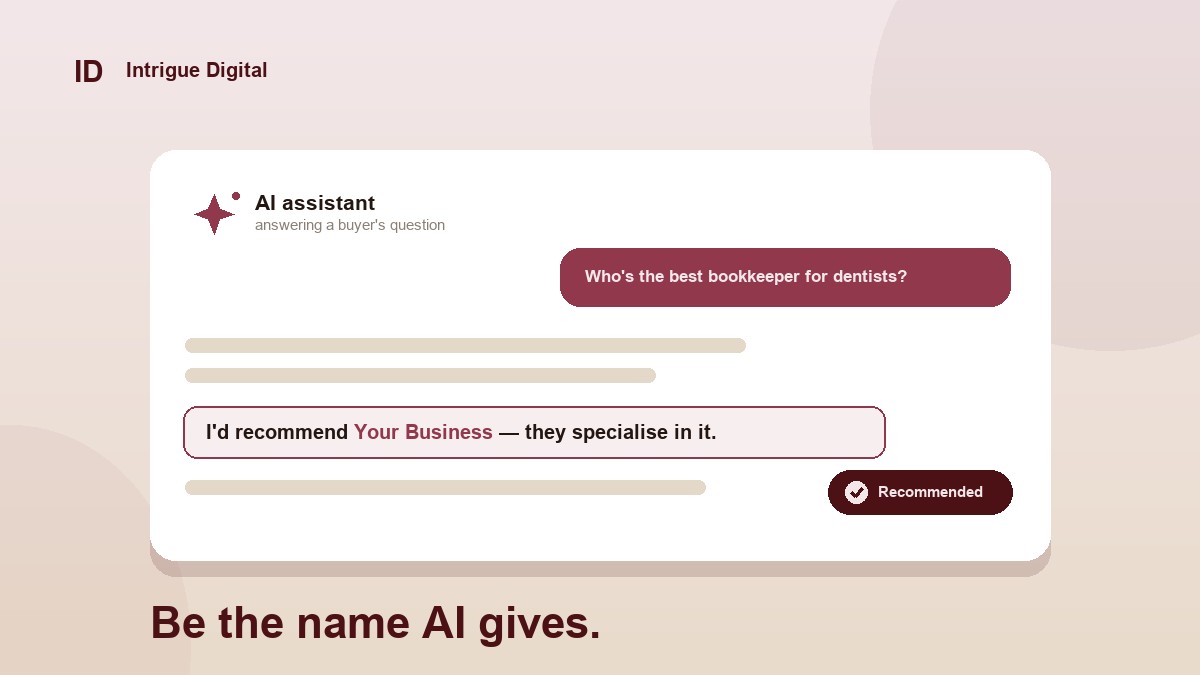
Why this matters now, not next year
The way Australians find businesses is changing faster than most owners realise. Research firm Gartner has forecast that traditional search engine volume will fall by around 25 percent by 2026 as people shift to AI chatbots and virtual agents. That is not a distant prediction any more, it is the environment you are selling into today.
At the same time, the searches people still run on Google increasingly end without a click. A 2025 Pew Research Center analysis of nearly 69,000 Google searches found that when an AI Overview appeared at the top of the results, only about 8 percent of searches led to a click on a normal result, roughly half the rate of searches without one. The links inside the AI summary were clicked in only about 1 percent of cases. In other words, the AI answer is increasingly the destination, not a signpost to your website.
Put those two trends together and the conclusion is uncomfortable but clear: if the AI does not mention your business, a growing share of your potential customers will never know you exist. Being invisible to AI is becoming the same thing as being invisible to the market.
There is an upside, though, and it is a big one. The visitors AI does send tend to be unusually valuable. A 2025 Semrush study of clickstream data found that AI-search visitors converted at roughly 4.4 times the value of traditional organic visitors, and a separate analysis of 94 ecommerce sites found ChatGPT traffic converting about 31 percent higher than non-branded organic. The volume is still a fraction of Google's, Google organic still drives far more conversions in absolute terms, but each AI-referred visitor arrives further along, because the assistant has already done the convincing.
How AI assistants actually choose who to name
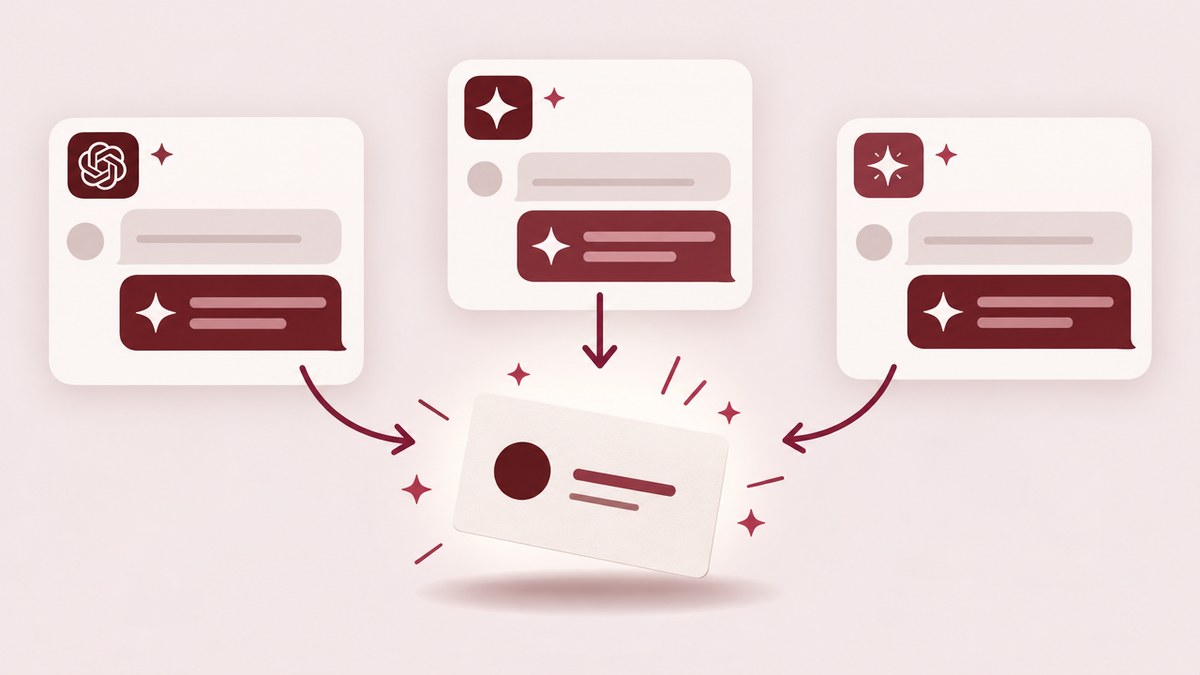
It helps to understand what is happening under the hood, without the jargon. When someone asks ChatGPT "who is a good bookkeeper for dentists in Australia", the model does not run a live Google search and read ten pages. It draws on two things: what it learned during training from the wider web, and, for tools connected to live search, a small set of sources it retrieves and trusts in the moment. From those, it composes a single answer and names a handful of businesses.
So the question is not "how do I rank first". It is "how do I become one of the few sources the model is confident enough to name". Three factors decide that.
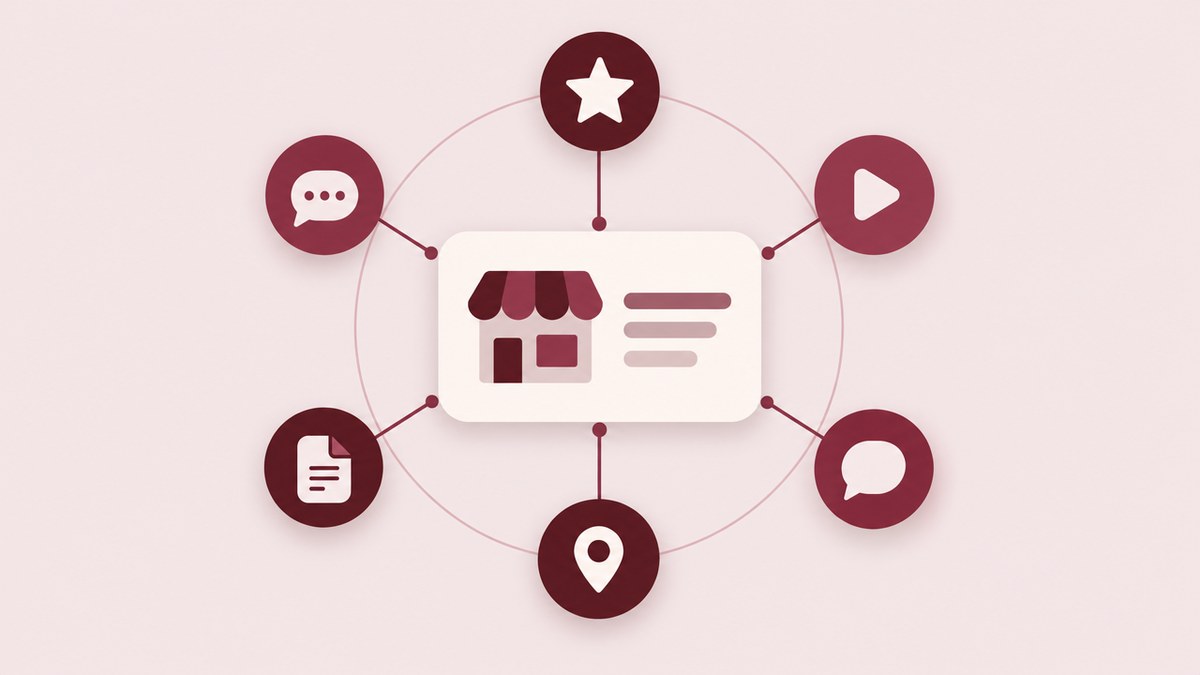
- Can it identify you clearly? The AI needs a consistent, unambiguous picture of who you are, what you do and where. Conflicting details across your site, Google Business Profile and directories make it distrust all of them.
- Can it find a clear answer on your site? Models quote content that directly answers a question in plain language. Vague "about us" prose gives them nothing to lift.
- Does anyone else vouch for you? Reviews, citations and mentions on sites the model already trusts are what turn a maybe into a recommendation.
What the data says about how AI chooses who to name
The scale of this shift is easy to underestimate. In October 2025, OpenAI reported that ChatGPT had passed 800 million weekly active users, up from around 100 million just two years earlier. That is a single assistant now fielding a meaningful share of the questions your customers used to type into Google, and it is only one of several.
So what actually makes an AI name one business over another? The most useful evidence comes from large-scale correlation studies. They show association rather than proof of cause, but the pattern across them is strikingly consistent, and it points somewhere most business owners do not expect.
- Mentions beat links. An Ahrefs analysis of roughly 75,000 brands found that the strongest web signal associated with AI visibility was branded web mentions, a correlation of about 0.66, far ahead of traditional backlinks at around 0.22. For AI, being talked about matters more than being linked to. This is a genuine departure from classic SEO, where links are king.
- Where you are mentioned counts. The same research found YouTube among the strongest single signals of all. Separately, an SE Ranking analysis found that domains with a heavy Reddit presence averaged around seven ChatGPT citations, versus under two for domains with little presence. And according to analytics firm Profound, Wikipedia is ChatGPT's single most-cited source, accounting for a notable share of all citations. The lesson: credible third-party platforms, not just your own website, are where AI visibility is won.
- Most answers come from training, not live search. One 2025 analysis by CXL estimated that ChatGPT uses live web search for only about a third of queries, meaning the rest draw on what the model already absorbed during training. That is why consistent, widely-repeated information about your business matters so much. It has to be baked in before the question is ever asked.
- Being cited is not the same as ranking. A Topify analysis of around 30 million citations found that roughly 80 percent of the sources AI tools cite do not rank in Google's top 100 for the same query. You do not have to win the Google race to be the AI's answer, which is exactly why this is such an open opportunity right now.
The practical reading of all this is clear. Earn mentions in the places models trust, industry media, YouTube, reputable communities and reference sites. Keep your information consistent everywhere so it survives into the next round of training. And do not assume a weak Google ranking rules you out. These are levers most of your competitors are not pulling yet, which is what makes the next twelve months such a rare window.
Case study: named for medical practices, invisible for dentists
This is not theory. True Tally Bookkeeping, a firm we have worked with, ran a simple experiment. They asked ChatGPT who handles bookkeeping for medical practices, and they were named. They asked the same question about dentists, and they were not, even though they genuinely serve both.
The gap was not quality or effort. It was that their medical and allied-health content was detailed and specific, while their dental content was thin. The model simply had more to work with on one than the other. They rebuilt the dental pages to answer the real questions dental owners ask, award rates, GST on dental services, associate-dentist payroll and Single Touch Payroll, kept their business details identical across every profile, and made their registration and reviews easy to verify.
Within a couple of months the firm had moved from effectively zero inbound enquiries to around twenty qualified leads a month, most of them arriving already convinced, because a search engine or an AI assistant had told them True Tally was the answer. The lesson is that AI visibility is specific. You earn it topic by topic, not with a single generic page.
The six things that get you named
Here is the practical checklist we work through with every client who wants to be the answer AI gives.
- Entity consistency. Your business name, services, address, phone and credentials must match exactly everywhere: your website, Google Business Profile, LinkedIn, industry directories and review sites. Pick one spelling and one format and never deviate. Inconsistency is the single most common reason a legitimate business is ignored.
- Answer-first content. Lead each important page with a direct, quotable answer to one real question, then explain underneath. Write the way a knowledgeable human would reply to a customer, not the way a brochure reads. AI tools lift those opening passages almost verbatim.
- Structured data. Schema markup for your organisation, services, reviews and FAQs tells machines, plainly, what each part of your page means. It does not guarantee a mention, but it removes ambiguity, and ambiguity is what gets you skipped.
- Genuine reviews. Reviews remain one of the strongest trust signals for both Google and AI tools. BrightLocal's annual consumer research has consistently shown how heavily buyers, and now the models trained on their behaviour, weigh them. Build a simple, compliant habit of asking happy clients.
- Citations and mentions. Being named on sites the model already trusts, industry bodies, local media, reputable directories, is how you borrow their credibility. A few quality mentions beat dozens of junk listings.
- Specificity beats breadth. "Bookkeeping for dentists" earns a mention where "bookkeeping services" is ignored, because the AI can match a precise phrase to a precise question. Niche down on the page, then repeat the pattern across every industry you serve.
Case study: from not named once to cited
ShopRest, a China-to-Australia ecommerce fulfilment company, learned this from the hard side. Founder Yujia Zhai asked ChatGPT and Perplexity to recommend a fulfilment company for exactly the service ShopRest provides. The business was not named once. It existed, it had real customers, but to the AI it may as well not have been there.
The fix was not a bigger ad budget. It was structuring their information so the models could understand and trust what they do: clear service definitions, consistent details, and content that answered the specific questions importers ask. You cannot buy your way into an AI recommendation. You earn it by being the clearest, most trustworthy source on your topic.
Common mistakes that keep you invisible
- Treating AI visibility as a one-page job instead of a topic-by-topic one.
- Letting your details drift out of sync across profiles over the years.
- Writing marketing fluff where a plain answer would be quoted.
- Chasing dozens of low-quality directory listings instead of a few credible ones.
- Ignoring reviews, or worse, breaching the rules in regulated industries by using them where you cannot.
AEO and SEO are related, but not the same job
It is worth being precise about the terms, because they are often used loosely. Search engine optimisation (SEO) is about ranking your pages in a list of results. Answer engine optimisation (AEO) is about being the answer an AI gives, whether that is a chatbot or a Google AI Overview. Generative engine optimisation (GEO) is the broader practice of making sure generative models understand, trust and recommend you by name.
They share a foundation, clear content, authority and trust, but they diverge in emphasis. SEO rewards pages that are comprehensive and well-linked. AEO rewards passages that answer one question cleanly and businesses whose identity the model can pin down without ambiguity. A page can rank well and still be useless to an AI because it never states a plain answer. The reverse is also true. The practical takeaway is that you should not drop your SEO, you should add an answer-first layer on top of it, so the same content works for both a human skimming Google and a model composing a reply.
What this looks like across industries
The pattern is the same everywhere, but the specifics change. A few examples from the industries we work with:
- Finance and mortgage brokers. Buyers ask AI how much they can borrow, whether to refinance, and who to use. Brokers who publish clear, compliant explainers and keep their credit licence details consistent get named where generic "best broker" pages are ignored.
- Dentists and allied health. Patients ask for a provider near them for a specific treatment. Specific treatment pages, consistent AHPRA details and genuine, compliant trust signals decide who the AI suggests, within the advertising rules that regulated health practitioners must follow.
- Trades and builders. People ask AI who does a particular job in a particular suburb. A trade that owns its town and service in plain, answer-first content, backed by reviews, beats a bigger competitor with a vague services list.
- Law firms. Clients ask AI to explain a legal problem and suggest who handles it. Firms that publish clear, practice-specific content become the ones the model cites, because they gave it something trustworthy to quote.
In every case the winning move is the same: be specific, be consistent, and answer the real question plainly.
How to test your own AI visibility this week
You do not need a tool to start. Open ChatGPT, Gemini and Perplexity and ask the exact questions your best customers would ask: "who is a good [your service] in [your area]", "best [your service] for [the niche you want]". Note where you are named, where a competitor is named instead, and where the AI names no one useful. Each gap is a content and trust job you can close. Then do it again in a month and watch the pattern move.
That is the whole game in 2026: ranking first on Google and being named by ChatGPT are now two different jobs. The businesses that win the second one are not the biggest, they are the clearest and most trusted on the questions that matter.
Sources: TechCrunch, ChatGPT 800 million weekly active users; Semrush, ChatGPT search study; Gartner, search volume forecast; Pew Research Center, AI Overviews and clicks; BrightLocal Local Consumer Review Survey; plus correlation research referenced above from Ahrefs (approx. 75,000 brands), Profound, SE Ranking, CXL and Topify. Correlational findings indicate association, not proof of cause.
Frequently asked questions
How do I get my business recommended by ChatGPT?
Make your business identity consistent everywhere, publish answer-first content for the specific questions your buyers ask, add schema and genuine reviews, and earn mentions on sites the model already trusts. ChatGPT names sources it can identify and trust, so you become one of them topic by topic.
Is being named by AI different from ranking on Google?
Yes. Google ranks pages; AI assistants assemble an answer and name a few businesses. You can rank well on Google and still never be named by ChatGPT, because the two use different signals. Both are worth doing, but they are separate jobs.
How long does it take to show up in AI answers?
It varies, but businesses that fix their consistency, content and reviews often see movement within one to three months on specific, lower-competition questions. Broad, competitive topics take longer and depend heavily on authority.
Can I pay to be recommended by ChatGPT?
No. You cannot buy an organic AI recommendation. It is earned through clarity, useful content and trust signals. This is exactly why it is such a durable advantage once you have it.
How do I check if ChatGPT mentions my business?
Ask ChatGPT, Gemini and Perplexity the questions your customers would ask, such as 'best [your service] in [your area]'. Note where you are named and where you are not, then close the gaps. Repeat monthly to track progress.
Want to be the brand AI mentions?
Intrigue Digital does SEO, AEO and GEO as one system, so your business shows up whether someone searches Google or asks ChatGPT. One business per industry, per postcode.
Book a free strategy call →